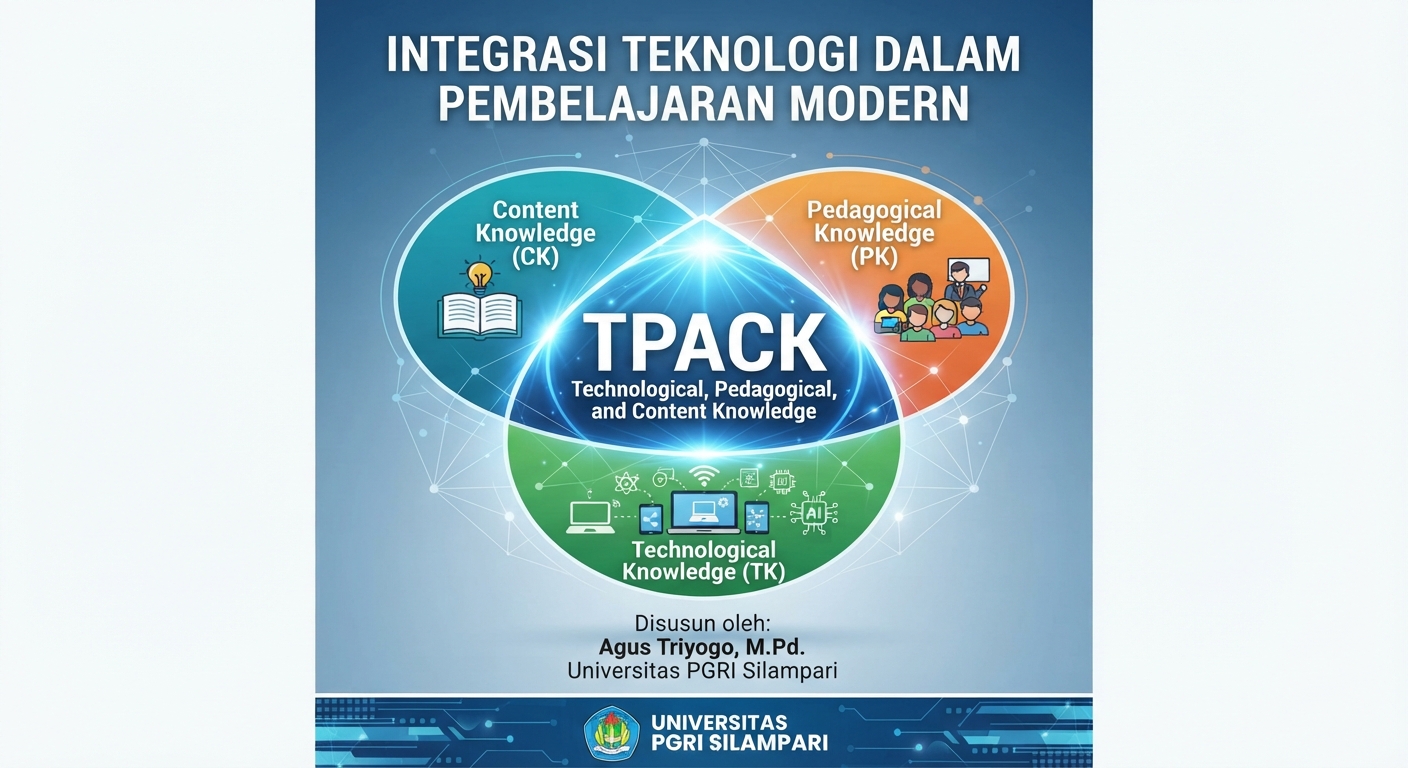
The TPACK Concept (Technological, Pedagogical, Content Knowledge)
The TPACK Concept (Technological, Pedagogical, Content Knowledge)
TPACK is a theoretical framework that identifies the types of knowledge an educator needs to master in order to effectively integrate technology into their teaching. This framework was developed by Punya Mishra and Matthew J. Koehler in 2006, building upon Lee Shulman’s concept of PCK (Pedagogical Content Knowledge).
At its core, the TPACK framework asserts that effective teaching with technology is not simply about dropping devices or apps into a classroom. Instead, it requires a deep understanding of how three primary elements—technology, pedagogy, and subject matter—intersect and influence one another.
Three Core Elements
-
Content Knowledge (CK)
-
A teacher’s mastery of the subject matter or academic discipline being taught.
-
Example in the context of English language teaching: Deep comprehension of functional text structures, grammar, vocabulary acquisition, or linguistic theories.
-
-
Pedagogical Knowledge (PK)
-
A teacher’s deep knowledge of teaching methods, strategies, practices, and general learning processes (classroom management, lesson planning, assessment design, and student psychology).
-
Example: Knowing how to facilitate small-group discussions, execute ice-breaking techniques, or design effective student worksheets.
-
-
Technological Knowledge (TK)
-
Knowledge about how to operate and leverage various technological tools and systems, ranging from conventional tech (digital whiteboards) to advanced technologies (LMS software, mobile applications, artificial intelligence, and web management).
-
Example: The ability to navigate a Moodle platform, edit instructional videos, or utilize productivity app features.
-
Four Intersection Elements
When the three core elements cross paths, new and specific forms of knowledge emerge:
-
Pedagogical Content Knowledge (PCK): Knowledge of pedagogy tailored specifically to teaching a particular subject matter (without necessarily involving technology). Example: Knowing the best methodology to teach English vowel pronunciation to native speakers of a specific regional language.
-
Technological Content Knowledge (TCK): Understanding how technology can be used to present or transform subject matter. Example: Understanding how a digital comic creation app can effectively represent narrative plot structures in English literature.
-
Technological Pedagogical Knowledge (TPK): Understanding how various technologies can be used to alter general teaching strategies regardless of the specific subject matter. Example: Knowing how to use the breakout room feature in a video conferencing app to facilitate collaborative group work.
-
TPACK (Technological, Pedagogical, and Content Knowledge): The ultimate intersection where all three components blend harmoniously. This represents an educator’s intuitive understanding of how to select and apply specific technologies to teach specific subject concepts using the most appropriate pedagogical methods, thereby addressing students’ learning challenges in real-world classrooms.
Why TPACK Matters in Education
-
Prevents “Technology for Technology’s Sake”: This framework stops teachers from using technology purely out of a trend without considering whether it genuinely helps students understand the material.
-
Context-Driven and Flexible: TPACK acknowledges that there is no single “best” technology for every situation. An instructor’s approach will always depend on the specific learning context, student demographics, and available technological resources.
Task : Working in groups, students analyze a case study of an educational institution that has either succeeded or failed in integrating technology. The analysis must be structured using the TPACK (Technological Pedagogical Content Knowledge) framework and address aspects of digital ethics and copyright.





Thank you sir for the material🙏🏻