Negotiation
In the context of business contracts and procurement, Material Negotiation refers to the bargaining process centered on essential contract terms (material terms). These terms directly determine each party’s core obligations, financial risks, scope of work, and legal remedies.
A breach of a material term typically constitutes a material breach, giving the non-breaching party the right to terminate the contract and seek damages.
1. Key Components of Material Terms
Unlike administrative or standard boilerplate clauses, material terms define the foundational value exchange of a deal:
-
Pricing & Payment Terms: Contract value, payment schedules, currency exchange parameters, late penalties, or price-adjustment mechanisms.
-
Scope of Work & Specifications: Required technical standards, deliverables, quality metrics, and performance guarantees.
-
Timelines & Delivery Milestones: Effective dates, completion deadlines, and penalty structures such as Liquidated Damages (LDs).
-
Limitation of Liability & Indemnification: Cap on monetary damages in case of breach or operational failure, alongside risk-allocation indemnities.
-
Intellectual Property (IP) & Confidentiality: Ownership of created assets, patent usage, proprietary rights, and non-disclosure obligations.
-
Governing Law & Dispute Resolution: Arbitration rules, jurisdiction, and governing legal frameworks.
2. Case Study Scenario: Supply Chain Contract Negotiation
Background
A manufacturing company is negotiating a multi-year raw material procurement agreement with an international supplier.
Critical Points of Negotiation (Material Terms):
-
Price Volatility Mechanism:
-
Supplier’s Position: Requests a floating price model tied to global index fluctuations every month due to market uncertainty.
-
Buyer’s Position: Insists on a fixed-price model for 12 months to protect operating budgets.
-
Material Resolution (Compromise): Adoption of a price-collar clause. Prices remain fixed unless the market index moves beyond a agreed threshold (e.g., $\pm10\%$), at which point a shared adjustment formula takes effect.
-
-
Delivery Delays & Penalty Clause (Liquidated Damages):
-
Supplier’s Position: Seeks to broaden the Force Majeure clause to excuse supply chain disruptions without penalty.
-
Buyer’s Position: Demands a $1\%$ daily fine for late deliveries, as delays immediately halt assembly line operations.
-
Material Resolution (Compromise): A 5-business-day grace period is introduced, after which a progressive penalty applies, capped at a maximum of $5\%$ of the purchase order value.
-
3. Core Strategies for Material Negotiations
-
Establish your BATNA (Best Alternative to a Negotiated Agreement): Understand your walk-away position before negotiating core terms so you know when a deal is no longer financially or legally viable.
-
Separate Material Terms from Boilerplate: Concentrate negotiation leverage on financial exposure, risk allocation, and deadlines rather than low-stakes administrative verbiage.
-
Leverage Concessions (Trade-Offs): Never concede a material point without securing an equivalent value exchange (e.g., “We can accept shorter payment terms if you extend the product warranty period to 24 months”).
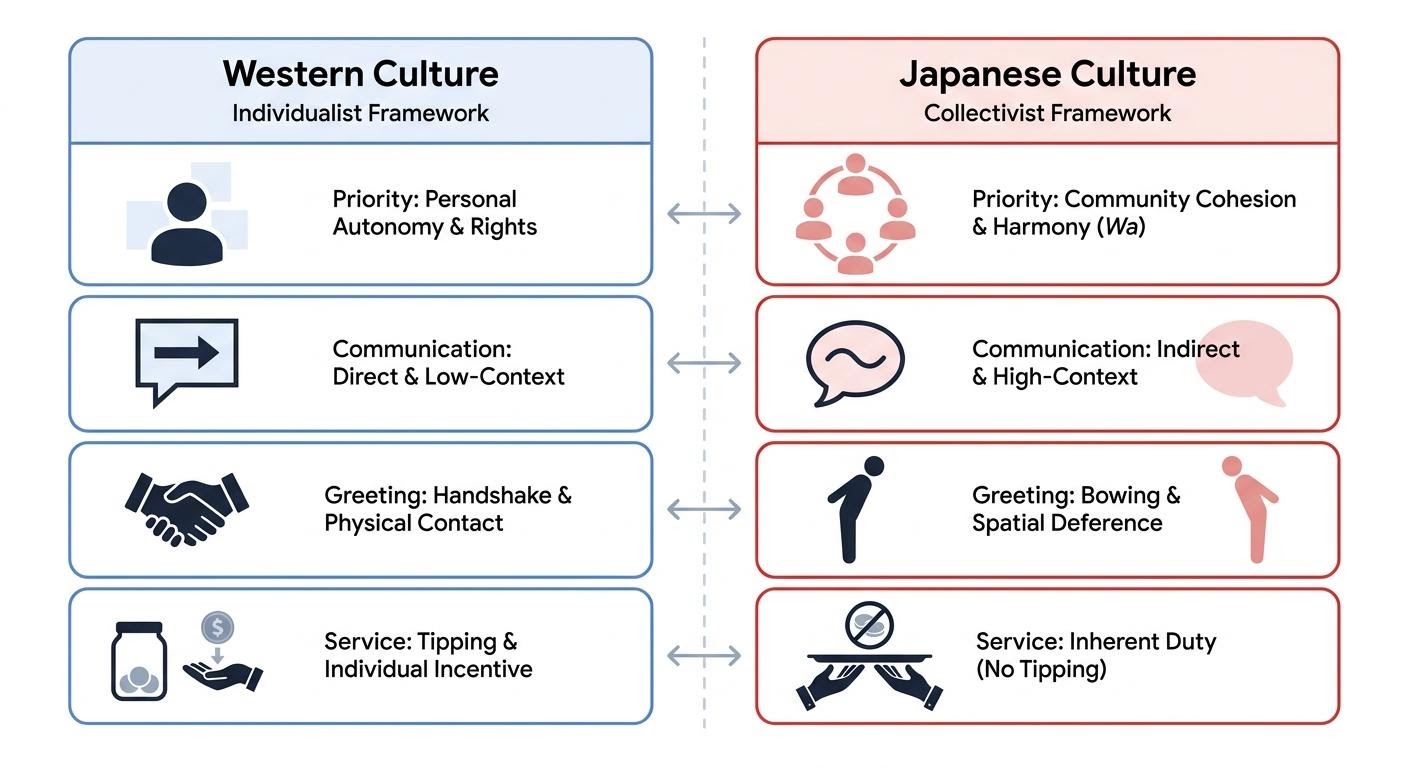
Perbedaan etika komunikasi bisnis lintas negara umumnya berakar dari kerangka budaya High-Context vs. Low-Context (Edward T. Hall) serta dimensi budaya Individualisme vs. Kolektivisme (Geert Hofstede).